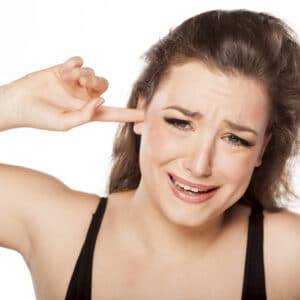
“My ear feels blocked” sounds like a simple problem, but it does not always have a simple cause. Earwax is common, yet the same pressure, muffled hearing or underwater sensation can come from the Eustachian tube, fluid behind the eardrum, an outer-ear problem or a change in the inner ear.
At our Rosny Park clinic, our audiologists do more than look for wax. We work out where the problem is occurring: in the outer ear canal, behind the eardrum in the middle ear, or within the hearing system itself. That distinction matters because microsuction can remove wax from the canal, but it cannot remove pressure or fluid from behind an intact eardrum.
Why do different ear problems feel so similar?
The brain is not particularly good at identifying exactly which part of the ear is creating a blocked sensation. A plug of wax in the canal can reduce sound and create fullness. Poor pressure regulation behind the eardrum can create nearly the same experience. Some people describe popping, crackling, echoing, a hollow sound, reduced hearing or the feeling that they need to “clear” the ear.
The timing and accompanying symptoms provide useful clues, but examination and testing are often needed to be confident about the cause.

Start with the three main parts of the ear
It helps to picture the ear in three sections:
- Outer ear: the ear canal leading to the eardrum. Wax, trapped objects, swelling and outer-ear infection occur here.
- Middle ear: the air-filled space behind the eardrum. It contains the tiny hearing bones and connects to the back of the nose through the Eustachian tube.
- Inner ear: the cochlea and balance organs. Sudden changes here may also feel like blockage, even when the canal and eardrum look clear.
Microsuction treats material in the outer ear canal. It does not pass through the eardrum and cannot drain the middle ear. If the blockage is coming from pressure, fluid or an inner-ear change, a different pathway is required.
What does an earwax blockage usually feel like?
Earwax can build gradually, or an ear can feel suddenly blocked after swimming or showering when a wax plug absorbs water. Common features include:
- muffled or reduced hearing
- fullness in one or both ears
- hearing your own voice differently
- tinnitus that becomes more noticeable
- itch or mild discomfort
- a hearing aid whistling or seeming less effective.
Symptoms alone do not confirm wax. Some ears with substantial wax still hear surprisingly well, while a person with only a small amount may have another cause for their symptoms. The first useful step is a clear view of the canal and eardrum.
What is Eustachian tube dysfunction?
The Eustachian tube connects the middle ear to the back of the nose and throat. It opens briefly when we swallow or yawn, helping equalise pressure across the eardrum. When it does not open or close normally, the ear may feel blocked even though the canal contains no wax.
Eustachian tube dysfunction is commonly associated with a cold, nasal congestion, allergies, sinus inflammation, rapid altitude changes, flying or diving. People may notice:
- pressure or fullness
- popping or crackling
- hearing that changes when swallowing or yawning
- discomfort during flights or driving through changes in elevation
- a sensation of fluid moving, although no fluid is visible in the canal.
The eardrum may appear pulled inward, or middle-ear pressure testing may show that pressure is not equalising normally. Depending on the history and findings, GP or ENT assessment may be appropriate.
Can fluid sit behind the eardrum?
Yes. Fluid can collect in the middle ear, often after a cold or middle-ear infection. This is sometimes called middle-ear effusion or “glue ear”. It is particularly common in children but can also occur in adults.
Because the fluid is behind the eardrum, it cannot be reached by a suction tip or ear drop placed in the canal. Ear drops treat the canal side of an intact eardrum; they do not travel through it to clear middle-ear fluid.
Middle-ear fluid can reduce the movement of the eardrum and create a temporary conductive hearing loss. In children, persistent hearing difficulty may affect listening, speech access and classroom participation. In adults, persistent one-sided middle-ear fluid deserves medical review rather than repeated wax treatment.
What does video otoscopy show?
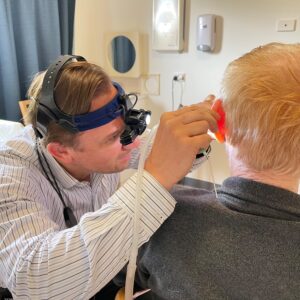
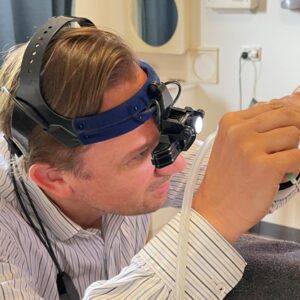
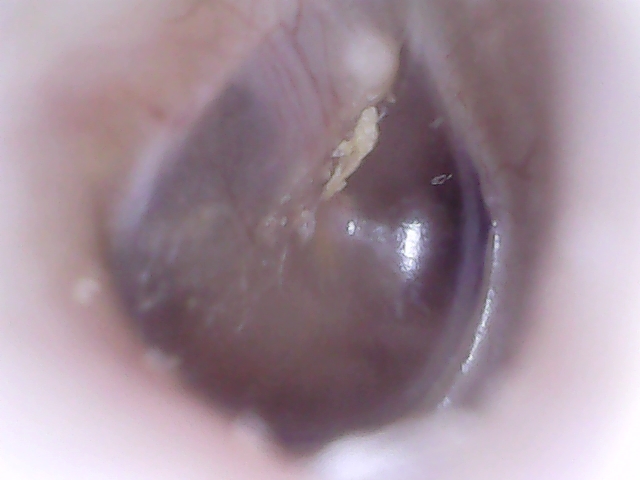
Otoscopy allows us to inspect the ear canal and eardrum. Video otoscopy can display and record an enlarged view, making it easier to explain what we can see.
We look for wax, canal swelling, discharge, foreign material, eardrum perforation, grommets, scarring, retraction and possible signs of fluid or pressure behind the eardrum. A clear canal does not necessarily mean the ear is functioning normally; it simply rules out one group of causes.
How does tympanometry help?
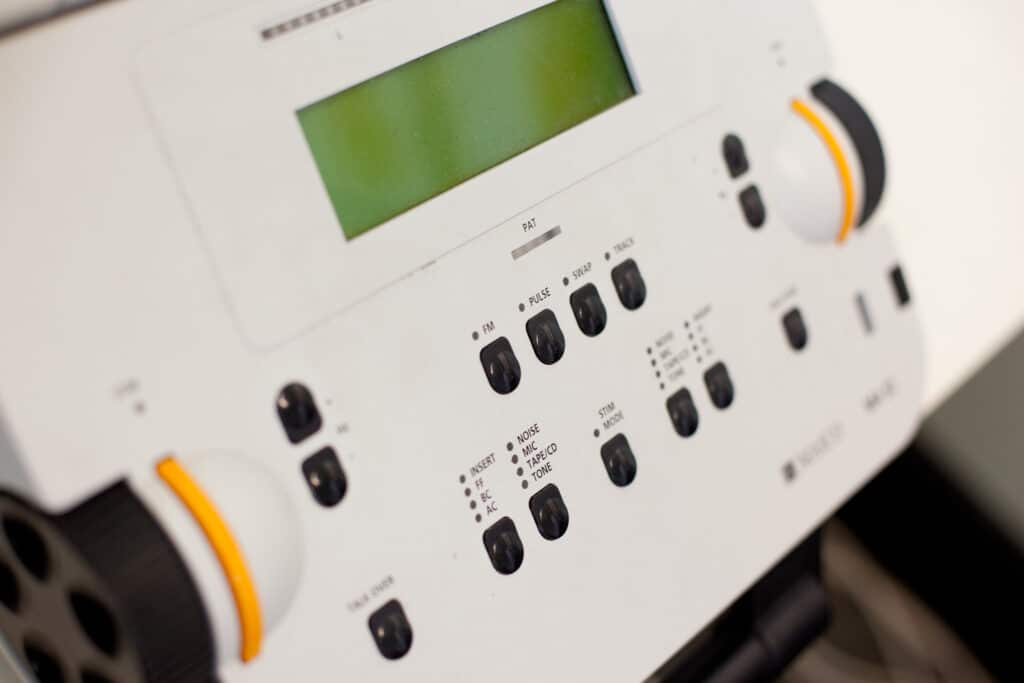
Tympanometry is a quick measurement of how the eardrum and middle ear respond to a gentle change in air pressure. It does not measure hearing directly. Instead, it helps us assess eardrum mobility, middle-ear pressure and patterns that may be consistent with fluid, Eustachian tube dysfunction or a perforation.
This is particularly useful when the ear feels blocked but the canal is clear, or when hearing remains muffled after wax has been removed. It turns a vague sensation into more useful clinical information.
When is microsuction the appropriate treatment?
Microsuction may be appropriate when wax or debris is obstructing the outer ear canal and the ear is suitable for removal. The clinician uses direct magnified vision and a fine suction tip or other instruments. No water is flushed into the ear.
The value of an experienced clinician is not measured by how long the suction is running. A well-prepared, accessible plug may be removed quickly. Efficient removal can reduce the time that instruments and suction are within a sensitive canal, while careful observation and communication remain essential throughout.
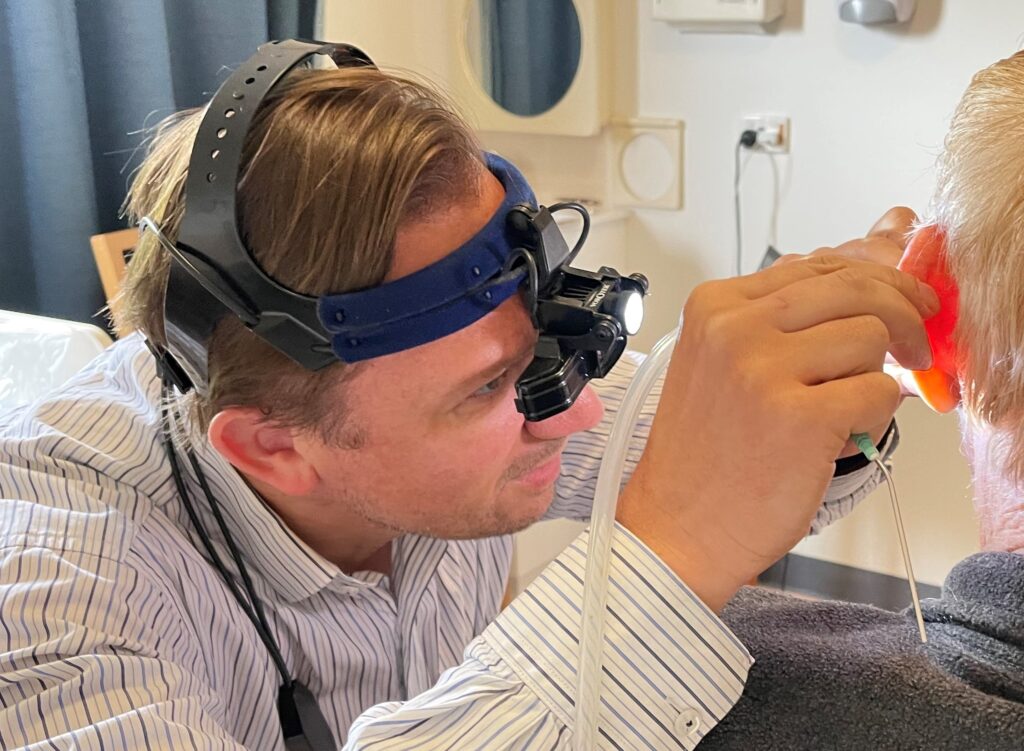
Sometimes wax is very hard, tightly impacted, sitting close to the eardrum or difficult to reach because of the shape of the canal. It may need preparation or a staged approach. If we see active infection, significant inflammation, an unexpected growth or another concern, we will explain why medical review is a better next step.
Why more ear drops are not always the answer
If wax is confirmed, the right preparation can make removal easier. We commonly recommend an olive-oil-based ear spray because it can lubricate and soften the plug while helping it remain relatively cohesive for microsuction.
Repeatedly adding drops without knowing what is present can be unhelpful. Drops will not correct negative middle-ear pressure or dissolve fluid behind the eardrum. They may also aggravate an inflamed canal, and some products are unsuitable where there is a perforation, grommet or certain previous ear surgery. Pain, discharge or a surgical ear should be discussed with a clinician before drops are used.
Wax, pressure or infection: useful clues
These patterns are not a diagnosis, but they can help explain why an appointment sometimes leads to a different recommendation than expected:
- Wax is more likely when material is visible in the canal and hearing improves after it is removed.
- Eustachian tube dysfunction is more likely when symptoms follow a cold, allergy, flight or pressure change and include popping or fluctuation.
- Middle-ear fluid is more likely when eardrum movement is reduced and tympanometry supports fluid behind the drum.
- Outer-ear infection is more likely with increasing pain, itch, discharge, canal swelling or tenderness when the outer ear is moved.
- An inner-ear change must be considered when hearing drops suddenly despite a clear canal.
When a “blocked ear” needs urgent attention
A sudden hearing loss can be mistaken for wax because both can produce muffled hearing, fullness and tinnitus. If hearing changes suddenly over hours or a few days—particularly in one ear—seek urgent medical assessment rather than waiting for a routine wax appointment.
Prompt medical advice is also important for severe ear pain, bleeding, discharge, significant dizziness, new neurological symptoms, injury, fever or redness and swelling behind the ear.
What happens at a Rosny Park appointment?
We start by listening to what the ear feels like and when the symptoms began. We ask about colds, allergies, swimming, flying, previous ear surgery, infections, tinnitus and changes in hearing. We then examine the canal and eardrum.
If wax is the cause and removal is appropriate, we can usually address it using microsuction or suitable instruments. If the canal is clear—or the symptoms do not resolve after removal—we can use hearing assessment and tympanometry to investigate further, then recommend GP or ENT review where indicated.
Blocked ears in Rosny? Find the cause before treating it
If your ear feels blocked, the most useful question is not simply “Is there wax?” but “Which part of the ear is causing this?” A clear examination helps avoid treating the wrong problem and provides a more direct path to the care you need.
Contact our Rosny Park clinic to arrange an appointment, or learn more about our earwax microsuction service in southern Tasmania.
This information is general and does not replace individual medical advice.